
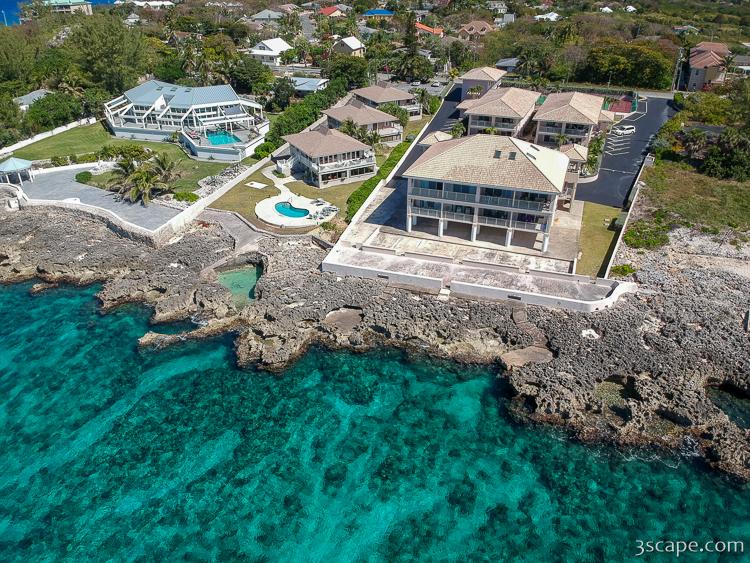
There’s a stretch of ironshore near West Bay where the coast doesn’t so much meet the water as dissolve into it. The rock is pocked with old tide pools, sharp enough to respect and worn smooth enough to walk on, and if you time it with the swell, you can jump straight off it into fifteen feet of water so clear you can watch the bottom the whole way down.
That was the first thing I did most mornings, before coffee, staying at a small condo complex called Bonnie’s Arch, named for a natural rock arch nearby that the sea eventually took back. It’s a fitting introduction to Grand Cayman. The island spends a lot of energy pointing you toward its beaches, and they’re worth the attention. But most of what makes Grand Cayman different from its Caribbean neighbors happens a few feet below the surface, where the visibility runs to a hundred feet on a good day and the water stays warm enough to forget you’re wearing a wetsuit for the wrong reason.
An Island Built on What’s Underneath It
Grand Cayman doesn’t have rivers or mountains to organize a visit around. What it has is reef, a lot of it, ringing an island that spent its early economy on turtling and its later one on diving once the turtles ran out. The change wasn’t subtle. By the 1950s and 60s, dive operators had figured out that the same drop offs and walls that made turtle hunting productive made for some of the best visibility diving in the Caribbean, and the island rebuilt its identity around it.
That history is easiest to feel at the USS Kittiwake, a retired submarine rescue ship that the Cayman Islands government sank on purpose in January 2011, a few hundred yards off Seven Mile Beach, specifically to give divers and snorkelers something new to explore and to take a little pressure off the natural reef. It sits upright in about sixty feet of water, close enough to the surface that snorkelers can see the deck from above while divers work through the interior.
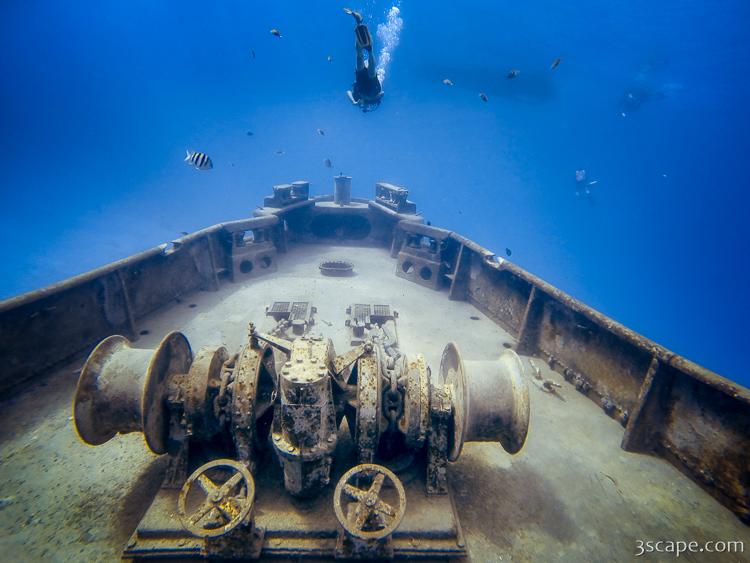
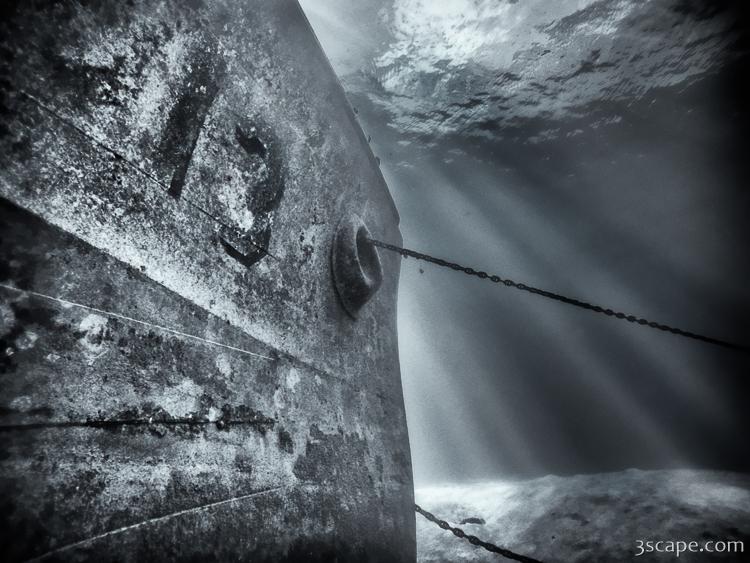
There’s something strange about swimming through a hallway that used to have sailors in it, now colonized by sponges and the occasional grouper that’s decided the wreck belongs to it. The metal has that specific texture that only a decade underwater produces, rust turned soft and velvety, barnacles filling in every seam. A wide angle lens barely does it justice. A macro lens on the rivets and the chain does something better.
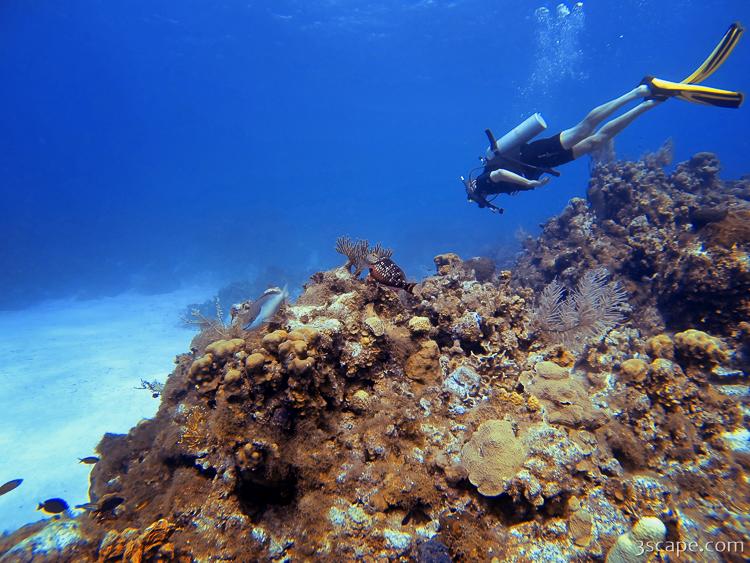
A short boat ride away is Turtle Schooner Reef, a shallower site along the same stretch of coast, and the contrast is the point. Where the Kittiwake is one large, deliberate object, Schooner Reef is built up the slow way, coral head by coral head, over centuries. Barrel sponges the size of trash cans, sea fans that move with the surge like they’re breathing, and reliably, a green sea turtle working its way along the bottom looking for something to eat.
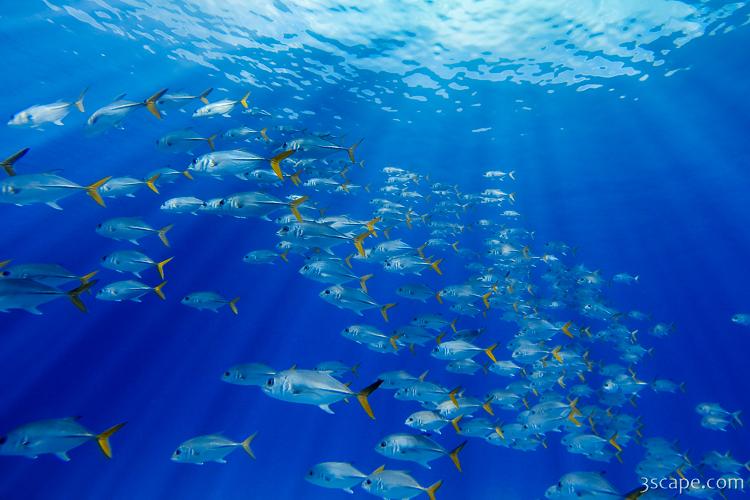
Midwater, away from the structure, is where the light shows up best. Schools of horse eye jack move through in the hundreds, banking together in a way that looks choreographed even though nothing about it is. Watching sunbeams cut through a school like that is one of those moments diving gives you that photography can only approximate, though it’s worth trying.
The Sandbar That Made the Island Famous
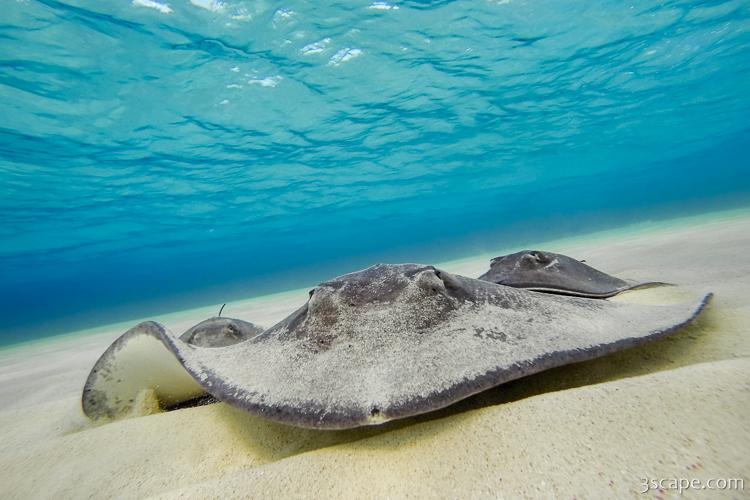
If the reefs are Grand Cayman’s quiet reputation, Stingray City is its loud one. The story usually goes that local fishermen, decades ago, started cleaning their catch at a shallow sandbar in the North Sound, and the southern stingrays that live in the area learned to show up when boats did. What started as a habit became one of the most recognizable things to do in the Caribbean, a sandbar in three or four feet of water where wild stingrays glide up close enough to touch.
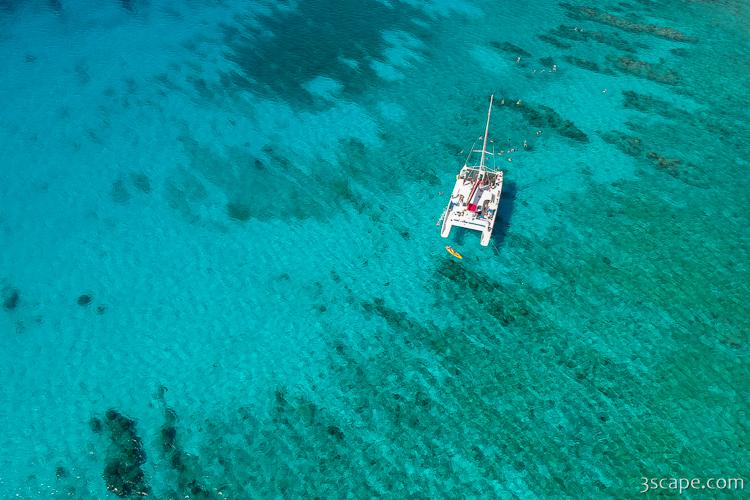
Getting there is part of the experience. Catamarans run out from Seven Mile Beach across the Sound, sails up if the wind cooperates, and from above the water changes color in bands, from teal to nearly white where the sand shelves rise close to the surface.
At the sandbar itself, the stingrays are calmer than the hype suggests, more curious than urgent, nosing along the sand for a piece of squid and then settling back down to half bury themselves again. It’s easy to be skeptical of an attraction this well known, and then the ray glides over your foot and the skepticism goes out with the tide.
Rum Point, Starfish Point, and the Slower Side of the Island
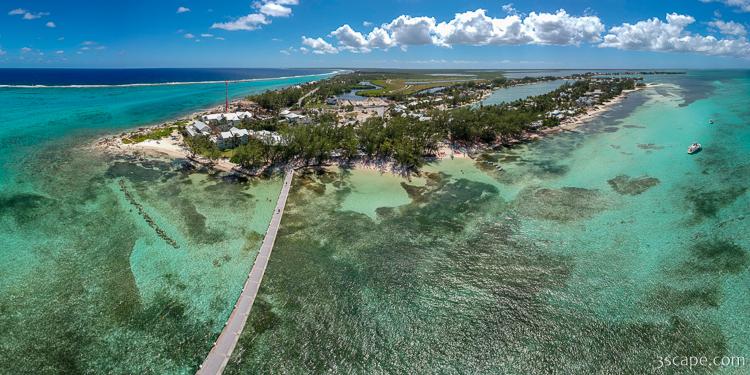
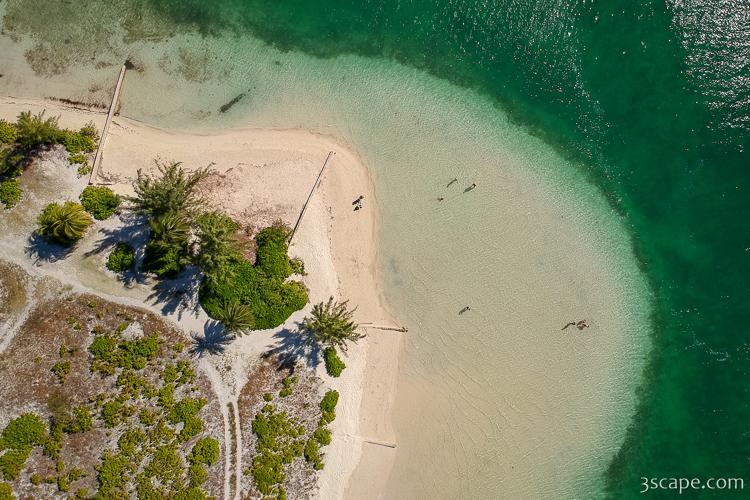
The north side of Grand Cayman moves at a different pace than the resort strip along Seven Mile Beach. Rum Point is the anchor of it, a spit of land facing the Sound with water so shallow you can wade out a hundred yards and still be standing. Hammocks are strung between the trees, there’s a pier that runs out past the shallows, and a beach bar that’s been serving mudslides for long enough that it’s become part of the island’s shorthand for relaxing.
A short walk or golf cart ride from Rum Point is Starfish Point, named honestly for once. Cushion sea stars sit scattered across the sandy shallows, red orange against the white bottom, and the water stays calm enough that finding them barely requires effort.
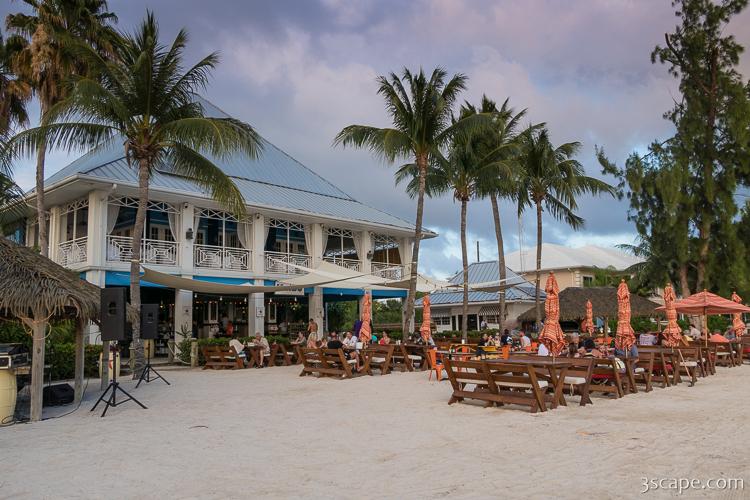
For food along this side of the island, Kaibo Beach Bar and Grill sits right on the sand, the kind of place where you can arrive by boat, order fish tacos, and stay through sunset without anyone rushing you along. It’s unpretentious in a way that suits the north side generally.
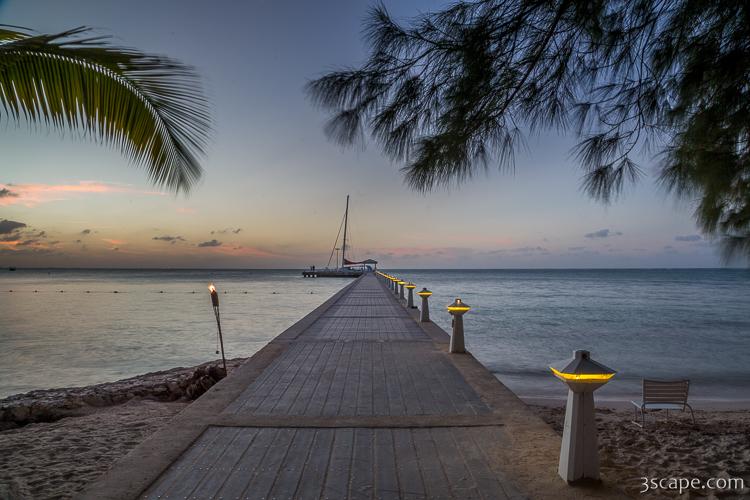
As evening settles in back at Rum Point, the tiki torches along the pier get lit and the water goes from turquoise to something closer to slate.
A Detour Through Hell, and a Sunset at Smith Barcadere
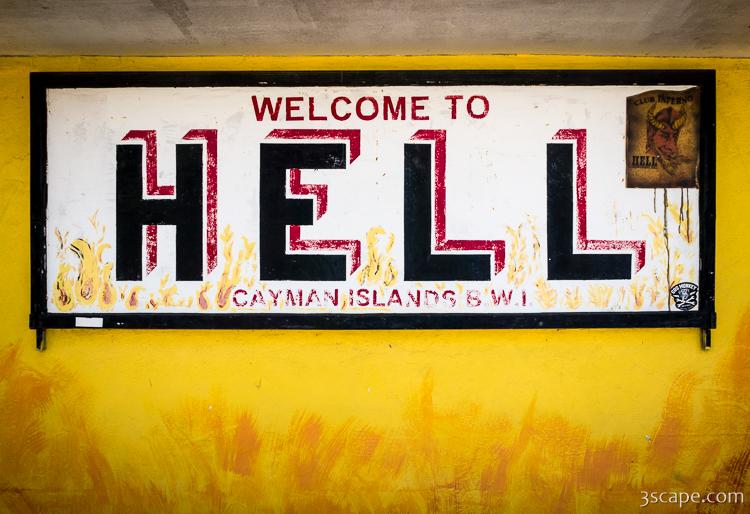
Not everything about Grand Cayman is scenery. In West Bay, there’s a small patch of jagged black limestone, ironshore worn into sharp, twisted spikes by centuries of rain and salt spray, that someone long ago decided looked like the genuine article and named accordingly. Hell is a village now, more or less, built around that formation and a post office that will happily stamp your postcards as having come from Hell, Grand Cayman. It takes about ten minutes to see the whole thing and it’s worth every one of them, if only for the postcards.
For an ending to the day, Smith Barcadere, a small public cove just south of George Town, does something the bigger beaches don’t. The rock formations here wrap around a narrow inlet, and at sunset the light gets caught in the mist coming off the surf, turning the whole scene warm and hazy at once. It’s a locals’ spot more than a resort one, quiet even when the rest of the island is busy, and a reasonable case for saving your last evening for it rather than another sunset cruise.
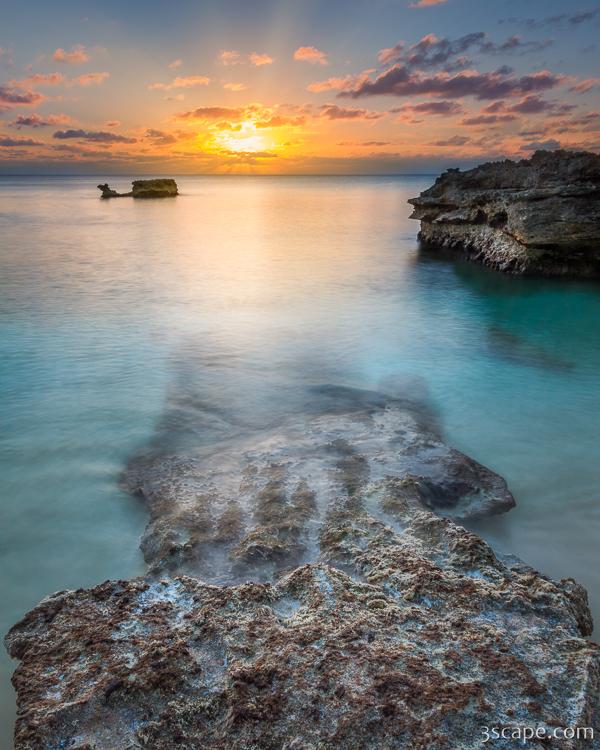
If you have an extra hour and want to see the island without anyone else around, Cemetery Beach, tucked along Seven Mile Beach’s northern end, is the kind of quiet that a lot of visitors never find, mostly because it isn’t in front of a resort.
Planning the Trip
Grand Cayman is warm year round, but the calmest water and best diving visibility tend to run from about April through August, before hurricane season picks up. Stingray City and the Rum Point catamaran runs are weather dependent, so it’s worth booking those early in a trip rather than the last day, in case conditions push things around. Seven Mile Beach is the easiest base if you want walkable restaurants and nightlife, while staying further out toward West Bay, or up near Rum Point, trades convenience for quieter mornings and closer access to the reefs.
Grand Cayman rewards the traveler willing to get wet more than it does the one content to look at the water from a lounge chair. The beaches are genuinely good. But the island’s real character, the wrecks turned reefs, the stingrays that learned to trust people, the light moving through a school of fish, is the kind of thing you only understand once you’ve gone under to see it.